AI marketing
An AI marketing agency, minus the agency
Scaile pairs a senior marketer with AI systems that draft, research, report and follow up, so a small team ships like a big one.
Scaile is what most people mean when they search for an AI marketing agency, with one honest correction: it isn't a traditional agency. It's an AI marketing partner led by one senior marketer, me, Guy Miotke. I set the strategy, pick the few places AI earns its keep, build those workflows with your team, and stay accountable for the number.
That distinction matters because of how most agencies work. You buy a retainer, a team you never meet runs tools you can't see, and when the contract ends the know-how leaves with them. I'd rather you keep the systems. Everything I build is designed to run inside your business after I step back.
Agency, partner or in-house: what actually differs
"AI marketing agency" is a label anyone can put on a website. Here is how the three real options compare, without the marketing gloss.
| AI-branded agency | Scaile (AI partner) | Hire in-house | |
|---|---|---|---|
| Who does the thinking | An account team, often junior | One senior marketer, 20+ years in the field | Whoever you hire |
| Where the AI lives | In their tools and their process | In your stack, documented, yours to keep | Depends on the hire |
| Accountability | Deliverables | The outcome you set on day one | The hire's manager (you) |
| When it fits | You want output and don't care how | You want a plan, results and a team that learns | You have the budget and a lead to manage them |
If you want pure production capacity at volume, a large agency may suit you better. If you want judgment plus systems, keep reading. If the real gap is senior leadership, that's the fractional CMO engagement, and the AI work sits inside it.

What to automate first
The best AI marketing automation is boring. Start with work that is repetitive, rules-based and easy to check. Skip anything where one wrong output damages a customer relationship. These are the four workflows I start with, in this order.
1. Content first drafts
Briefs, outlines, email sequences, ad variants and repurposed posts. AI produces a decent first draft in minutes. A human, ideally the person who knows your customer, edits it. The savings come from skipping the blank page, not from skipping the editor.
2. Lead research and follow-up
When a lead comes in, someone usually spends twenty minutes finding out who they are before writing a word. AI can pull the public context, summarize it, and draft a follow-up for a person to review and send. Speed to reply goes up and reps stop doing clerical work.
3. Reporting
Most weekly and monthly reports are the same numbers reshuffled. Connect the data once, let AI draft the narrative (what moved, what probably caused it, what to do next), and have a human confirm it. The report stops eating a day every month.
4. Ad creative iteration
This is where the biggest measured gain came from, covered below. The idea: use data to find which hooks, formats and messages work, then use AI to produce the next round of variations in that direction, fast.
Pick one, get it working, then add the next. A team that tries all four at once usually ends up with none.
Strategy before tools
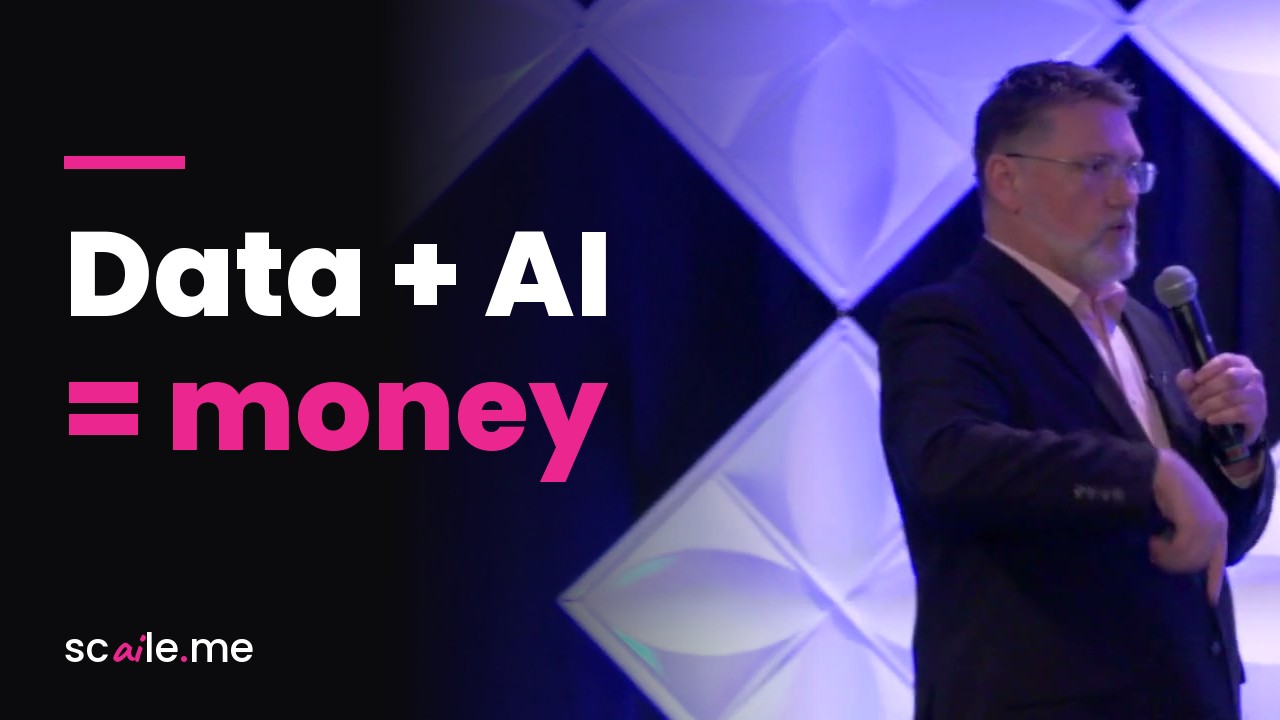
The most common failure I see is a business buying tools before deciding what it is trying to change. Ten subscriptions, no owner, no target. My rule is short: Data + AI = money. Without the data, AI is a fast way to produce confident guesses.
- Start with the destination. Name the one number the business needs to move, then work backward to the funnel steps that produce it. Tools come last.
- Use AI inward first. I treat AI mainly as an internal tool that speeds up your team's analysis and decisions, not as a robot that talks to customers unsupervised.
- Keep a human in the loop. AI still needs a human element. Someone reads the output, catches the wrong claim, and owns the brand voice.
- Own your first-party data. Cookies are fading. The data you collect yourself (site events, form fills, calls, CRM stages) is the asset that makes every AI step smarter. Rent tools if you like. Own the data layer.
A strategy in this sense is one page: the target number, the funnel that produces it, the handful of workflows worth automating, and how you'll know each one worked. If it doesn't fit on a page, it isn't a strategy yet.

AI marketing tools for a small business, by category
I won't hand you a ranked list of vendors. Products change every quarter, and many "top 10" lists are paid placements. Buy by job to be done instead.
- Writing and ideation. General-purpose AI assistants for drafts, outlines, subject lines and ad copy. Judge by how much editing the output needs.
- Creative production. Image, video and design tools for ad variations and social assets. Check licensing terms before commercial use.
- CRM and email automation. Often the AI features already inside the CRM or email platform you pay for. Try those before adding another product.
- Analytics and reporting. Dashboards and warehouse tools that answer plain-language questions. Only as good as the data feeding them.
- Meeting notes and internal ops. Transcription and summary tools that turn calls into tasks. Low risk and quick to pay off.
- Search and research. AI research assistants for competitor and customer digging. Verify every claim they surface.
Three questions before you buy anything: does it fix a task someone actually does every week, does it work with the data you have, and where does your customer data go? If you can't answer the third, wait. Broader questions on AI beyond marketing, such as operations and admin, are covered on the AI consultant for small business page.
What this looks like with real numbers
I ran marketing at a FinTech SaaS company, joining in January 2023 with no brand, no website and no staff.
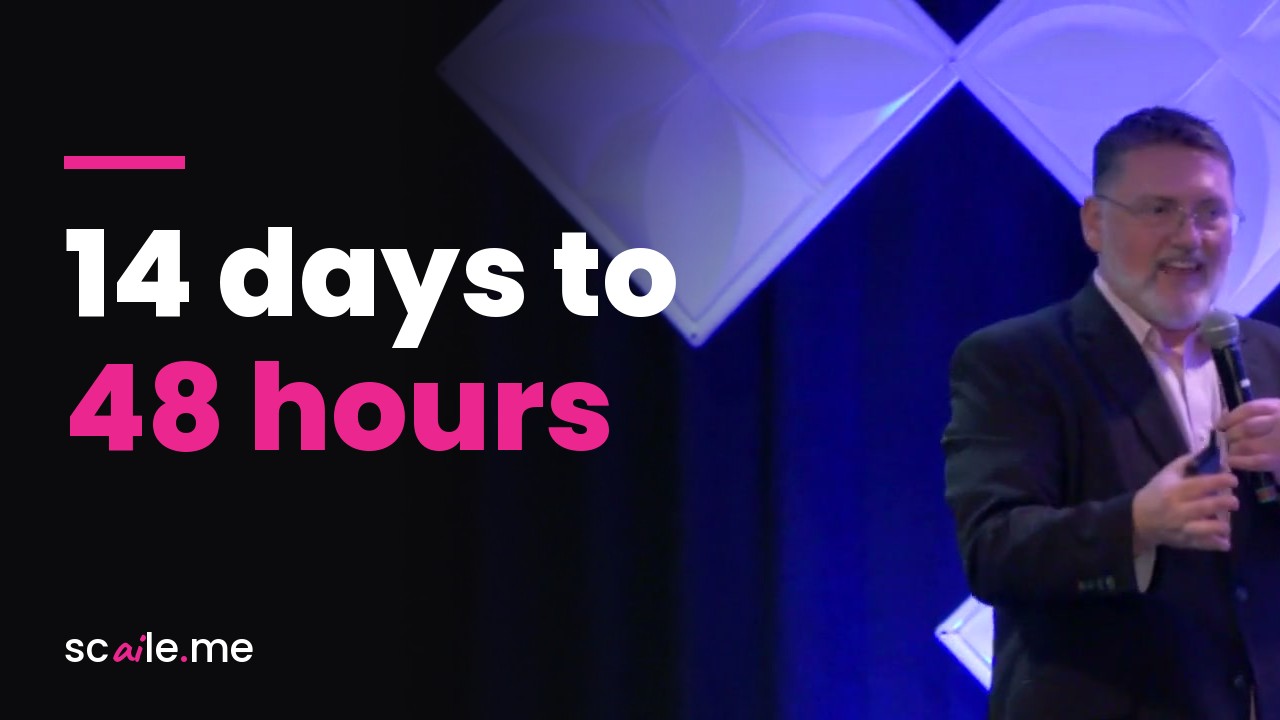
Ad turnaround cut from 10 to 14 days down to 24 to 48 hours. Using data and AI to find winning ads and produce the next round, we found winners in 3 to 5 days. Testing budget fell 35% because we stopped funding losers, and that money moved into ads that were working. Across 2024, return on ad spend also rose 20% while ad budgets grew roughly 300%.
The takeaway isn't that AI is magic. Speed was the constraint. When learning takes two weeks, you fund a lot of bad ads while you wait. Cut the cycle to a day or two and every dollar teaches you faster. It worked because the data was clean and a person made the final call. The client is anonymized here by choice.
How we'd start
The AI Growth Sprint is the front door: a fixed-scope, 30-day engagement covering a marketing and AI audit, a 90-day growth plan, and two AI workflows built and handed off. It suits teams that want a plan and a quick win before committing to anything ongoing. If you need ongoing leadership, the sprint rolls into the fractional CMO engagement. If you have a marketer and want a sounding board, there is a lighter advisor option. For broader strategy work, see marketing consulting. Scaile scopes each engagement on a call, and you can get in touch to start one.
Frequently asked questions
Is Scaile an AI marketing agency?
Not in the traditional sense. Scaile is an AI marketing partner: one senior marketer who sets strategy, builds AI workflows with your team, and stays accountable for results. There is no account-manager layer, and the systems stay with you.
What does an AI marketing consultant do?
An AI marketing consultant decides where AI belongs in your marketing, builds or configures those workflows, and trains your team to use them. The value is in choosing the right few tasks and setting up checks, not in reselling software.
How can a small business use AI for marketing?
Start with one repetitive job: draft content, research and follow up with leads, or draft the monthly report. Keep a person reviewing every output. Once that works, add the next workflow. Small teams gain the most because the freed hours go straight back into selling.
What should I automate first with AI marketing automation?
Content first drafts, lead research and follow-up, and reporting are the safest starts: repetitive, easy to check, and low risk. Automate customer-facing messages that run unsupervised last.
Do I need to buy a lot of AI tools?
No. Many teams already have AI features in their CRM, email platform and analytics. Use those first, add a tool only for a specific weekly job, and confirm where your customer data goes before you connect it.
Will AI replace my marketing team?
That isn't how I use it. AI handles first drafts, research and reporting so people spend time on strategy, customers and judgment. AI still needs a human element.
Next step
Talk to a CMO for 30 minutes.
No pitch deck. We look at where growth is stuck and whether fractional leadership is the right fix.